


10 home modifications that reduce a fall risk at home
Falls are the leading cause of injury-related hospitalisation in Australia, accounting for over 43% of cases, and for people with mobility or balance-related disabilities, home hazards significantly increase that risk.
The good news is that most fall risks in the home are preventable, and can be offset with NDIS home modifications that are simpler and more affordable than people expect.
Whether you’re planning ahead for an ageing parent or recovering from an injury, here are ten home modifications that can make a real difference to safety in the home.
1. Install grab rails in the bathroom
The bathroom is the area of the house where slips and falls are most likely to occur, because of its slippery floors and the difficulty involved in entering and exiting the shower stall or toilet. Bathroom home modifications, such as the installation of grab bars near the toilet, in the shower stall, and at the bath tub are useful since they provide something solid to grab onto when transferring.
2. Replace bath with a step-free shower
The act of climbing over the bath’s edge poses a serious fall danger for any individual suffering from impaired mobility or with balance difficulties. Replacing the bath with a step-free shower is one of the most requested modifications for people with mobility or balance limitations.
3. Improve lighting throughout the home
Lighting issues can easily be overlooked. Walkways, stairs, and outdoor pathways need sufficient lighting. In case of walkways, there should be switches on both sides of the walkway and the staircase. This way, a person doesn’t need to feel their way in the dark to get to a switch. Motion sensing lights are also a great solution for trips to the bathroom at night.
4. Remove or secure loose flooring
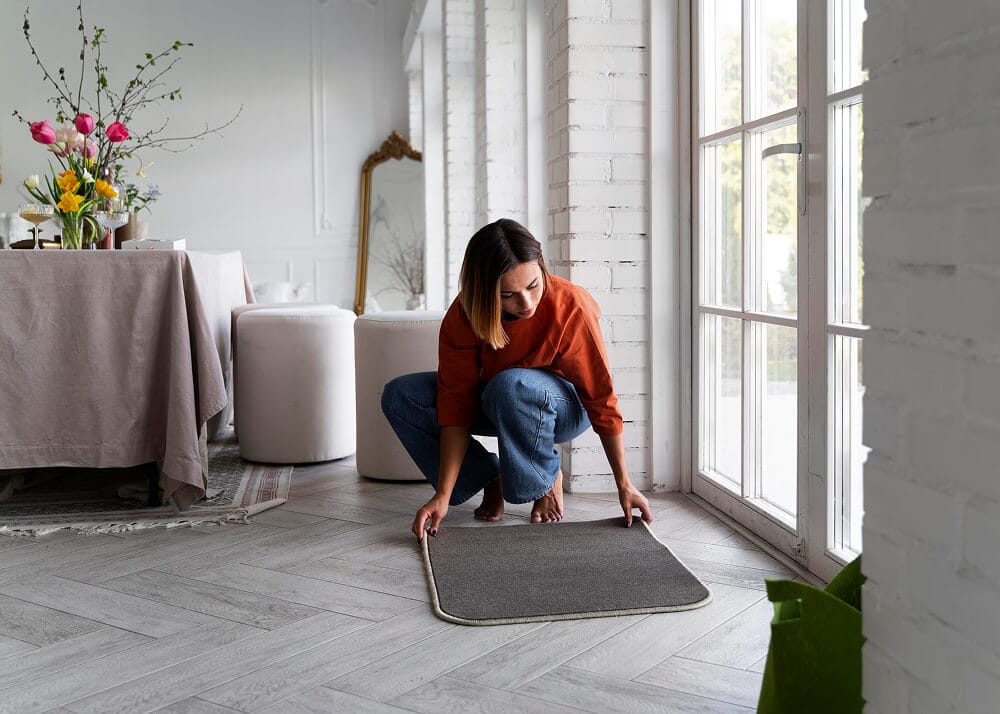
Trips from the use of rugs, mats, and uneven floors are quite common. Ensuring that the rug has a non-slip material on its back surface or eliminating the rugs completely is one way to prevent this type of accident. It may be advisable to install non-slip flooring materials when replacing them.
5. Install ramps to replace steps
Even a single step at an entryway can be a serious hazard. Ramps with a gentle, compliant gradient remove the need to navigate steps altogether and are especially important at the main entry, back door, and any internal level changes. Ramps are a core category of home modifications funded for people with mobility limitations, whether through the NDIS or aged care packages.
6. Widen doorways and clear pathways
A door frame that is too narrow for either a walker or a wheelchair, can cause an awkward gait, increasing the risk of a fall. An open space within the doorway and a clear pathway inside the home avoids this, improving mobility for those who need it.
7. Add handrails to staircases
Stairways should ideally have handrails installed on both sides of the stairway. This is especially vital to people who suffer from problems relating to their balance, people with poor vision, and people who have one side of their body weaker than the other.
8. Install a raised toilet seat and bathroom support rails
A low toilet seat demands considerable strength of the legs to get up from, posing a threat of falling down to those who are not physically fit. A higher toilet seat with support rails can be useful to those who need the extra assistance without necessarily sacrificing privacy.
9. Use non-slip surfaces outdoors and outdoor maintenance
Falls do not just occur within the house. The dangers of falls can be faced at the front and back of the home, due to slippery surfaces that may be mossy and wet. Keeping the outside areas of the home well maintained, and equipped with non-slip surfacing makes the outside as accessible as the inside, giving better outcomes for those with impaired mobility or poor balance.
10. Reconfigure kitchen layout for accessibility
Reaching high shelves or bending towards lower cupboards can be a problem for people with reduced mobility. It may also lead to loss of balance. Kitchen home modifications, such as reducing bench height, installing pull-down shelving and adjusting frequently used items at reachable levels reduces any risks involved with reaching and bending.
Getting these modifications funded and built
Many of these changes qualify for NDIS funding when they relate to a participant’s disability-related needs, and an Occupational Therapist assessment is usually the starting point for anything beyond minor changes (like grab rails). Complex modifications such as ramps, bathroom conversions, and doorway widening typically require a registered, experienced provider who understands both the building requirements and the NDIS approval process.
This is where choosing the right NDIS builders matters. Not every builder is familiar with NDIS documentation, home modification pricing arrangements, or the standards these projects need to meet. Working with a provider who specialises in NDIS home modifications means the assessment, quoting, approval, and construction process is handled correctly the first time, reducing delays and avoiding modifications that don’t meet funding requirements.
If you’re considering home modifications for yourself or a family member, Restore Home Modifications can help assess what’s needed and guide you through the NDIS approval process from start to finish.
Restore Home Modifications is a registered NDIS provider based in Melbourne, specialising in home modifications for the elderly and people with disability across Victoria. If you have questions about your funding or your next steps, get in touch with our team or request a quote.